What Is Information Technology Management?
04/28/2026
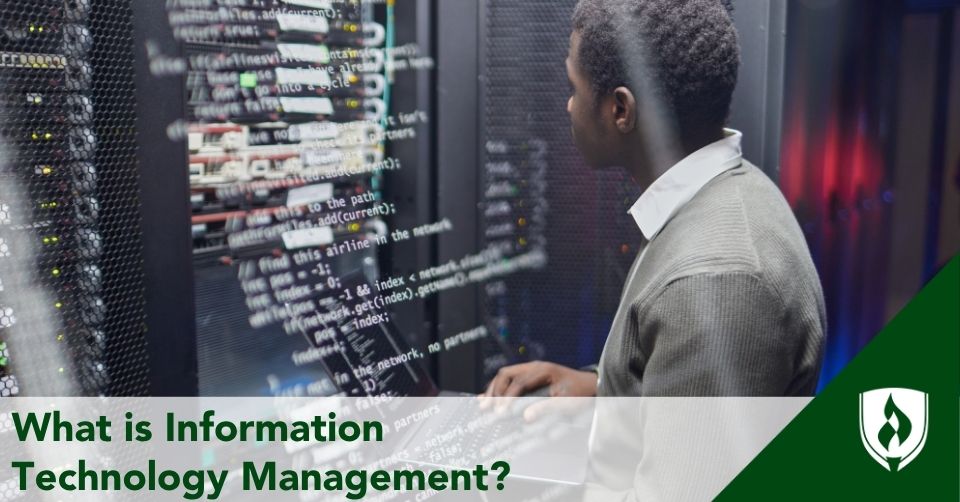
Information technology (IT) management typically refers to the monitoring, administrating, and managing information technology across an organization's information systems, including hardware, software, and networks. IT management practices help ensure that technology operates efficiently to support employees and business processes.1,2
As IT management evolves, IBM® notes that IT departments are tasked with keeping systems reliable, secure, and capable of supporting emerging technologies such as AI, cloud computing, and IoT. At the same time, IT management is about making technology accessible and useful for people, not just maintaining machines and software.1,2
Common Components of IT Management
An organization’s IT environment typically consists of multiple components that must work together:1
- Hardware: Physical devices like computer hardware, servers, routers, and storage systems. IT managers may also oversee operating system administration and network infrastructure.
- Software: Applications and management software that enables users to interact with raw data and perform daily tasks.
- Networks: Systems that connect devices, manage network security, and enable data processing through the organization.
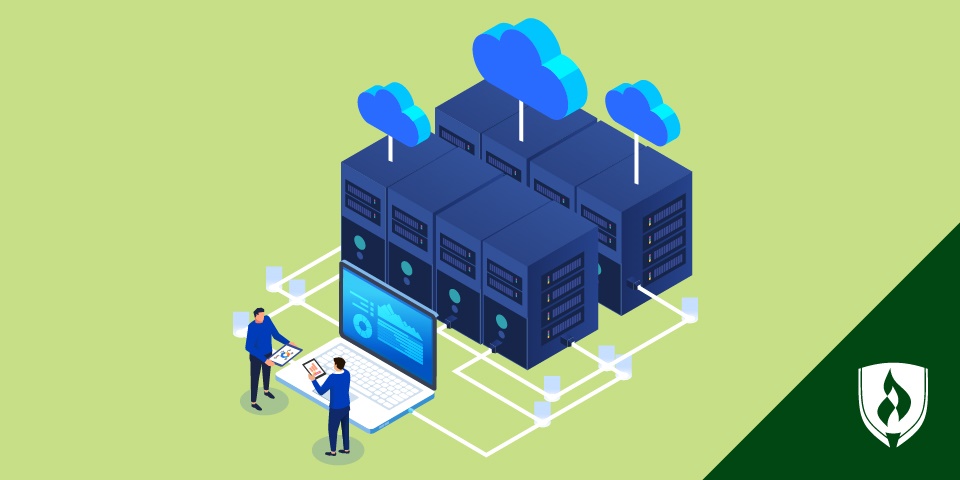
The infrastructure for these components can be hosted onsite, in the cloud, or as a hybrid that combines both options. The U.S. Chamber of Commerce also emphasizes that IT systems include mobile technologies and other devices that support the daily work of employees.1,2
Types of IT Systems in IT Management
IBM highlights several key IT systems that may help organizations manage technology effectively:1
- Analytics: Data analytics tools examine operational data to detect issues, find trends, and improve business performance.
- Cloud Computing: Cloud platforms and cloud services can provide scalability, support secure data storage, and offer flexibility for digital transformation.
- Artificial Intelligence (AI) and Cognitive Computing: Systems using machine learning and cognitive computing analyze data, predict potential problems, and provide automated support through AI-driven IT services.
- Internet of Things (IoT): Platforms collect and analyze sensor data, helping IT managers analyze data in real time and support efforts to improve business operations.
These systems help illustrate how IT management combines technology and strategy to maintain operational efficiency and support new capabilities.
Key Functions of IT Management
According to the U.S. Chamber of Commerce, IT management can involve several practical responsibilities:2
- Technical Support: Providing technical support to employees, training users, and helping to resolve technical issues.
- Ongoing Security: Ensuring data security, monitoring networks for threats, maintaining disaster recovery plans, and supporting regulatory compliance requirements, such as GDPR where applicable.
- Managing Infrastructure: Overseeing IT infrastructure to control infrastructure costs, maintain system performance, and manage relationships with vendors.
- Strategic Investments: Assisting business leaders with strategic planning and ensuring IT aligns with business objectives and emerging technologies.
These functions show that IT management is both reactive, solving immediate technical problems, and proactive; helping organizations plan and prepare for future technology needs.
Why IT Management Matters
IT management can help organizations maintain systems that are secure, highly available, and optimized. IT managers typically monitor daily operations, apply management frameworks such as the Information Technology Infrastructure Library (ITIL), and use their technical skills to help protect against data breaches.1,2
According to the U.S. Chamber of Commerce, IT management can help reduce downtime, enable quick recovery from system failures, and help protect against cyber attacks. The organization reported that nearly 48% of small businesses experienced a cyber attack in 2023.2
By combining technology oversight with strategic planning, IT management can help organizations maintain daily operations while also preparing for new opportunities, such as adopting cloud systems or AI tools.1
IBM® is a registered trademark of International Business Machines Corporation, New Orchard Road, Armonk, New York 10504.
1IBM®, What is IT management?, at https://www.ibm.com/topics/it-management (accessed April 9, 2026).
2U.S. Chamber of Commerce, What Is IT Management?, at https://www.uschamber.com/co/run/technology/what-is-it-management (accessed April 9, 2026).