Many people assume that if someone is arrested for a crime, the case will automatically move through the criminal justice system and lead to a clear outcome. But criminal cases often involve many steps after an arrest.
“Many people are under the impression that if they fall victim to a crime, justice will be served,” says Eileen Carlin, instructor of Law Enforcement at Rasmussen University.
“However, that is not always the case. Whether or not justice is served depends on many factors, one of which is the court prosecutor.”
The three components that make up the justice system are police, courts and corrections, according to Carlin. “The most powerful of these are the courts because the prosecutor works for the court system.”
“It is the prosecutor who decides who is offered a plea deal, who is released and not charged, and who is prosecuted.”
If you are considering a career in criminal justice, law enforcement or law, understanding the role of a court prosecutor is essential.
Prosecutors review evidence, consider criminal charges and help determine whether a case should continue in court.
What does a court prosecutor do?
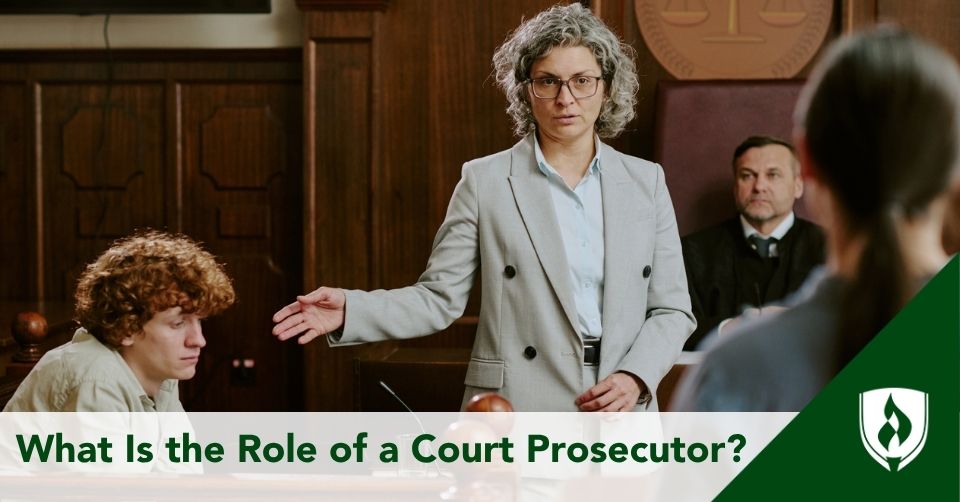
A court prosecutor is a public prosecutor who represents the government in criminal cases. Their role is to review evidence, decide whether criminal charges should move forward and take part in court proceedings.
A prosecutor’s duty is not only to win cases. Prosecutors are expected to seek justice and act in the public interest.
That means they must consider the facts of the case, the law, the strength of the evidence and the rights of everyone involved. According to the American Bar Association®, a prosecutor’s primary duty is to seek justice within the bounds of the law, not merely to convict.
“The prosecutor has an immense amount of power and discretion in the courts,” Carlin says. “It’s important to understand that a police officer’s work can be overridden or changed by the prosecutor.”
How prosecutors fit into the criminal justice system
Prosecutors are attorneys who practice criminal law on behalf of the government. They are part of the criminal justice system, but they are not judges and they do not work for the courts.
Instead, prosecutors work with courts, law enforcement agencies, victims, witnesses and defense attorneys.
In a criminal case, the prosecutor represents the government or public. A defense attorney or criminal defense lawyer is the legal representative for the accused person.
Different types of prosecutors
Prosecutors may have different titles depending on where they work. In many places, local prosecutors work in a district attorney’s office, county attorney’s office or state attorney’s office. These offices handle many of the criminal cases that come from local law enforcement.
Elected district attorney
An elected district attorney often leads the district attorney’s office. This person may serve as the chief prosecutor for a city, county or judicial district. The district attorney’s role is to guide the office, set priorities and oversee public prosecution.
Assistant district attorneys
Assistant district attorneys often handle the day-to-day work of prosecuting criminal cases. They may review police reports, prepare for court, speak with witnesses and appear in court on behalf of the government.
Line prosecutors
Line prosecutors are individual prosecutors who handle cases assigned to them by the prosecutor’s office. They may work on misdemeanor cases, felony cases or specific types of criminal cases depending on the size and structure of the attorney’s office.
County attorney
In some areas, a county attorney may handle criminal prosecution. The title can vary by state, but the role is similar in many ways. These local prosecutors review cases, decide how charges should move forward and represent the government in court.
Which prosecutors do police officers work with most?
Police officers most often work with local prosecutors.
Depending on the state, these prosecutors may work in a district attorney’s office, state attorney’s office, county attorney’s office or office organized by judicial circuit.
Local prosecutors usually handle criminal offenses that happen in their area. That can include many misdemeanor and felony cases investigated by local law enforcement.
Federal prosecutors handle federal criminal cases through the U.S. Attorney’s Office. An attorney general or attorney general’s office may also handle certain criminal cases, appeals or public prosecution matters, depending on the state.
How prosecutors review police reports
After an arrest or criminal investigation, law enforcement often sends reports and evidence to the prosecutor’s office. Prosecutors review that information to decide whether criminal charges should be filed, changed or continued.
This does not mean police work does not matter—rather, it means that excellent police work and documentation are vital.
Prosecutors rely on law enforcement agencies to obtain evidence, document what happened and explain the facts of a case. A clear report, lawful investigation and strong evidence can help prosecutors file charges and move forward with prosecuting criminal cases.
At the same time, prosecutors must decide whether there is sufficient evidence to support the charges in court. That legal decision is one reason the work of police officers and prosecutors is so closely connected.
What prosecutors do in court
Once criminal charges move forward, prosecutors help guide the case through court. Their work may include preparing witnesses, reviewing evidence, speaking in court, taking part in jury selection and presenting the case at trial.
Prosecutors must also make sure the case follows criminal law and supports a fair trial. That includes considering whether there is sufficient evidence to prove the case beyond a reasonable doubt.
If the facts do not support the charge, or if there is any problem in the reporting, or if the evidence cannot be used in court or sometimes if another outcome better serves the public interest, a prosecutor may dismiss charges or change how the case moves forward.
This is part of a prosecutor’s duty and professional conduct. Prosecutorial misconduct can happen when a prosecutor acts unfairly, hides important evidence or fails to follow legal rules.
What happens during plea bargaining?
Many criminal cases do not end in a full criminal trial. Instead, many are resolved through plea bargaining. In a plea deal, the prosecutor and defense attorney may agree to resolve the case without a trial.
A prosecutor in a district attorney’s office may consider the strength of the evidence, the criminal charges, the defendant’s history, victim input and public safety concerns before offering a plea deal. The defense attorney then advises the accused person on whether to accept it.
Even during plea bargaining, prosecutors still have a duty to be honest with the court.1
They should not make claims about the facts or criminal law that they do not believe are true. They also must follow court rules and share required legal information, even when that information may not help their side of the case.
How prosecutors work with defense attorneys
Criminal cases involve two sides in court. The prosecutor represents the government. The defense attorney, also called a criminal defense lawyer, represents the accused person.
Both sides may discuss evidence, criminal charges, plea offers and trial issues before a judge. If the case goes to a criminal trial, the prosecutor must prove the charges beyond a reasonable doubt. The defense attorney works to protect the accused person’s rights and challenge the government’s case.
This process is meant to support a fair trial and equal justice. The same basic structure applies whether the case is handled by a local prosecutor, an attorney general’s office or a federal prosecutor.
Why prosecutors may decline or dismiss charges
“Imagine a homeowner pays a contractor $13,000 for a new roof,” Carlin says.
“The contractor takes the money but never starts the work. The homeowner can’t reach them and is now out $13,000. The homeowner contacts law enforcement, and a detective opens an investigation.”
During criminal investigations like this, officers may obtain evidence such as payment records, messages, contracts or statements from the people involved, Carlin explains.
That information can then be sent to the prosecutor’s office for review.
Then, the prosecutor decides whether there is sufficient evidence to support criminal charges in court. The prosecutor may also consider whether the evidence can be used in court, whether witnesses are available and whether court appearances will be needed.
In some cases, the prosecutor may move forward with charges. “In others, the prosecutor may change the charges, request more information or dismiss charges if the legal standard is not met,” Carlin says.
But Carlin points out that prosecutors can also dismiss cases for a variety of reasons, such as booked-out caseloads, lack of available or cooperating witnesses, first-time offenses and more.
What police officers should know about prosecutors
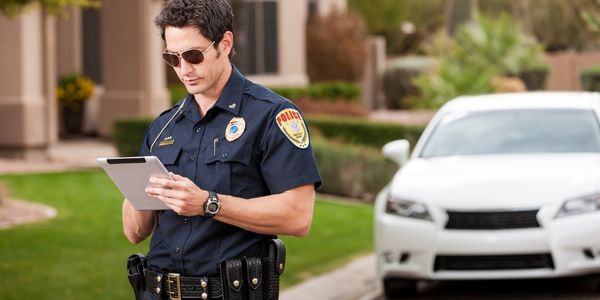
For anyone planning a career in law enforcement, it helps to understand how closely police officers and prosecutors work together. Officers gather facts, write reports, collect evidence and may make court appearances. Prosecutors use that work when deciding how to handle criminal cases.
In many law enforcement agencies, officers will work most often with assistant district attorneys from the local district attorney’s office. These prosecutors may ask follow-up questions, request more evidence or prepare officers to testify in court.
Prosecutors also play a role in trial work, including jury selection. During this process, they may question potential jurors to look for bias or concerns that could affect the case.
This is another reason clear police reports, lawful procedures and strong communication matter. Good law enforcement work can support public prosecution and help prosecutors with the task of prosecuting criminal cases fairly.
Why this role matters for criminal justice careers
Understanding the role of a public prosecutor can help future law enforcement professionals see how their work fits into the larger criminal justice system.
A case does not end with an arrest. It may move through prosecutors, defense attorneys, judges, plea bargaining and other court proceedings before it is resolved.
That process carries real weight. Prosecutors, police officers and others who work in criminal justice may face hard choices because criminal cases can affect a person’s freedom, a victim’s sense of safety and the public interest. This is one reason fairness, clear communication and respect for equal justice matter in these careers.
Check out What Is the Difference Between Law Enforcement and Criminal Justice? to clear up more about this field and the way these roles work together.
Specific baccalaureate education different from that offered at Rasmussen University, a specified undergraduate GPA, a specified score on the Law School Admission Test® (LSAT®) and/or specific application components may be required to be accepted into a law school program. It is important to check the requirements needed to be eligible for enrollment at various law schools.
1Prosecution Function, Fourth Edition (2017) of the Criminal Justice Standards for the Prosecution Function, ABA https://www.americanbar.org/groups/criminal_justice/resources/standards/prosecution-function/
LSAT® is a registered trademark of Law School Admission Council, Inc.
Law School Admission Test® is a registered trademark of Law School Admission Council, Inc.