How to Become a Surgical Technologist
05/07/2026
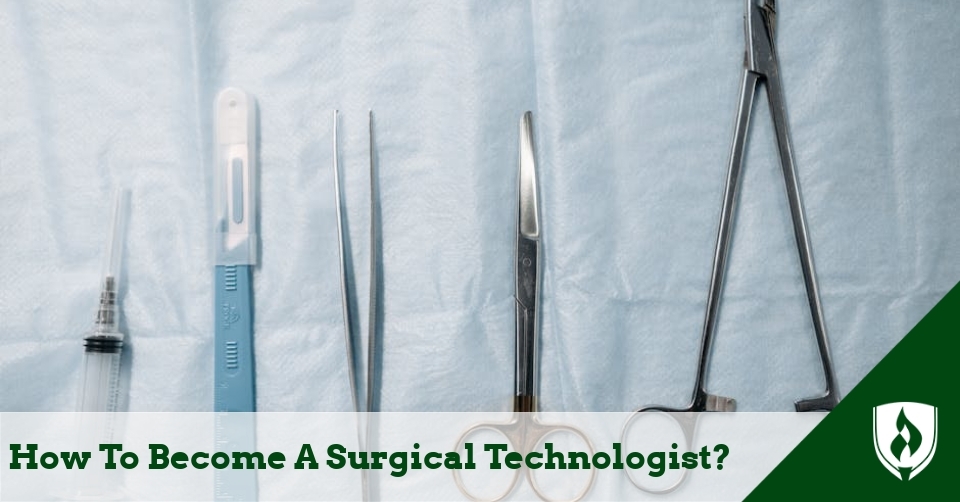
If you’re considering a hands-on healthcare career, becoming a surgical technologist may help you learn skills to support patient care in the operating room.1
Rasmussen University offers a CAAHEP-accredited Surgical Technologist associate degree program designed to help students develop the knowledge and skills that could support a future role on a surgical team. The program can be completed in as few as 21 months, depending on course load and scheduling.1
Key Skills for Surgical Technologists
Through the program, students may develop skills that are important for surgical technologists, including:1
- Operating Room Preparation: Learning to set up and maintain sterile operating rooms, anticipate the surgeon’s needs, and manage high-pressure situations.
- Surgical Procedures: Gaining practical exposure to common surgical procedures and supporting surgical teams.
- Sterile Technique: Understanding aseptic practices to promote patient safety during procedures.
- Compassionate Patient Care: Building interpersonal skills to provide professional and empathetic support to patients before, during, and after surgery.
Common Courses in Surgical Technologist Programs
The surgical technologist program at Rasmussen University is a blended on-campus and online program that's designed to provide a solid understanding of healthcare and surgical technology. Students have the opportunity to complete hands-on tasks in surgical procedure suite labs and flexible online coursework. Sample courses may include:1
- Fundamentals of Surgical Technology
- Surgical Microbiology
- Surgical Procedures III
- Human Anatomy and Physiology I
- Surgical Tech Practicum I
Surgical Technologist Program Overview
- Degree: Associate of Science degree in Florida, and Associate of Applied Science degree in Illinois and Minnesota1
- Length: May be completed in as few as 21 months for full-time students1
- Courses: 22 total1
- Certification Preparation: The program is designed to prepare students to take the Certified Surgical Technologist® (CST®) certification through the National Board of Surgical Technology and Surgical Assisting® (NBSTSA®) and the application fee for each qualified student's first exam attempt is included in the total tuition and fees.1
Typical Career Paths for Surgical Technologists
Graduates may pursue work as surgical technologists in settings such as hospitals and surgical centers. According to the Bureau of Labor Statistics the percent change in employment, projected 2024-2034 for surgical technologists is 4%.1,2
What Do Surgical Technologists Typically Do in the Operating Room?
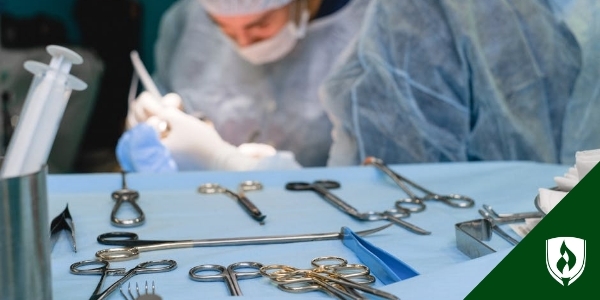
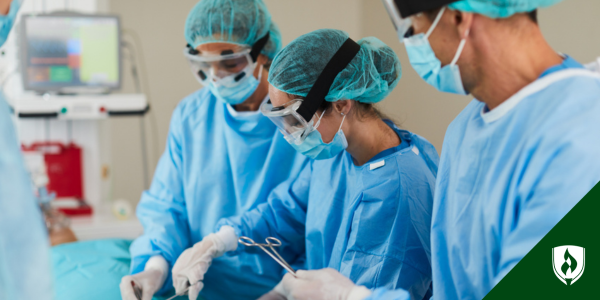
Surgical technologists, sometimes called operating room technicians, may assist surgical teams by preparing operating rooms, sterilizing equipment, and helping maintain a sterile environment. They might ready patients for surgery, pass instruments to surgeons, handle specimens, and help with post-operative care. Working alongside surgeons, nurses, and surgical assistants, they may support safe and efficient surgical procedures.3
Becoming a Certified Surgical Technologist (CST®)
After completing an accredited surgical technology program, graduates may pursue the Certified Surgical Technologist (CST®) credential by passing a national certification exam administered by the appropriate national board.4
The CST exam evaluates knowledge of surgical procedures, sterile technique, patient care, and the use of surgical instruments in the operating room.4
While certification requirements vary by employer and state, some employers, including certain hospitals and ambulatory surgical centers, may prefer or require certification exam credentials when applying for entry level surgical technologist roles.4
Explore Rasmussen’s Surgical Technologist Associate Degree Program
With multiple start dates, you can explore beginning the program on a schedule that works for you. Hands-on lab experiences are offered at campuses in Florida, Illinois, and Minnesota.1
Prospective students can review program details to learn more about surgical technologist training options.1
Certified Surgical Technologist® is a registered trademark of National Board Of Surgical Technology and Surgical Assisting; 6 West Dry Creek Circle Suite 100, Littleton, Colorado 80120.
CST® is a registered trademark of National Board Of Surgical Technology and Surgical Assisting; 6 West Dry Creek Circle Suite 100, Littleton, Colorado 80120.
National Board of Surgical Technology and Surgical Assisting® is a registered trademark of National Board Of Surgical Technology and Surgical Assisting; 6 West Dry Creek Circle Suite 100, Littleton, Colorado 80120.
NBSTSA® is a registered trademark of National Board Of Surgical Technology and Surgical Assisting; 6 West Dry Creek Circle Suite 100, Littleton, Colorado 80120.
1Rasmussen University, Surgical Tech Programs, https://www.rasmussen.edu/degrees/health-sciences/surgical-technologist/ (accessed April 2, 2026).
2Bureau of Labor Statistics, U.S. Department of Labor, Occupational Outlook Handbook, Surgical Assistants and Technologists, at https://www.bls.gov/ooh/healthcare/surgical-technologists.htm#tab-6 (accessed April 2, 2026). Employment conditions in your area may vary.
3Bureau of Labor Statistics, U.S. Department of Labor, Occupational Outlook Handbook, Surgical Assistants and Technologists, at https://www.bls.gov/ooh/healthcare/surgical-technologists.htm#tab-2 (accessed April 2, 2026). Employment conditions in your area may vary.
4CST® Certification, The National Board of Surgical Technology and Surgical Assisting, at https://www.nbstsa.org/cst-certification (accessed April 2, 2026).