What Can You Do With a Computer Science Degree?
04/28/2026
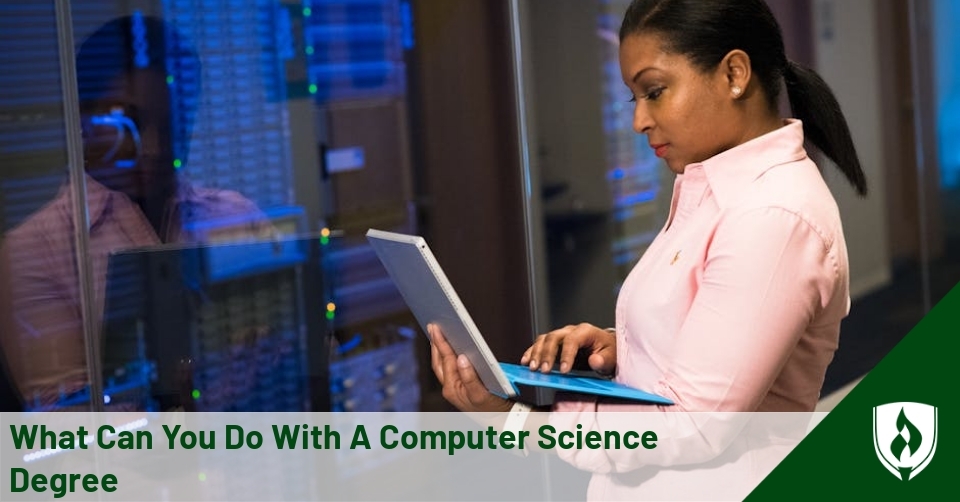
Computer science focuses on how software, systems, and data work together to solve problems and power modern technology. From developing applications and managing cloud infrastructure to building mobile experiences, the field plays a role in industries ranging from healthcare and finance to entertainment and education. Studying for a bachelor's degree in computer science may help prepare you for programming, system design, and data structures, while gaining insight into how digital products are created and maintained.1
A computer science degree may also introduce you to tools, frameworks, and methodologies used in real-world development environments. You could learn how to write code, test applications, collaborate with teams, and think critically about performance, scalability, and user experience.1
Typical Career Paths With a Computer Science Degree
A degree in computer science may help you build foundational knowledge relevant to roles across software development, mobile application development, and cloud-based systems. Some typical career paths may include:1
- Software developer
- Mobile developer, mobile software developer
- Cloud application engineer
Software Developer
If you’re interested in creating applications or systems that allow users to perform specific tasks, a career as a software developer could be worth exploring. This path may appeal to you if you enjoy analyzing user needs, designing solutions, and working through the full lifecycle of software development.2
Software developers may create computer applications as well as the underlying systems that run devices or control networks. They are often involved throughout the development process, from identifying user requirements to maintaining and improving software after release. Software quality assurance analysts and testers may also play a role in evaluating how software functions and identifying potential issues.2
Typical responsibilities may include:2
- Analyzing user needs and designing software solutions
- Recommending upgrades for existing programs
- Designing system architecture, components, and workflows
- Creating supporting models and technical documentation
- Ensuring software functionality through testing
- Documenting systems for future updates
Mobile Developer, Mobile Software Developer
If you’re interested in designing and building applications for smartphones and tablets, a career as a mobile developer could be appealing. This role may be interesting if you enjoy working with mobile technology, solving problems across devices, and creating user-friendly digital experiences.3
Mobile developers design, build, and implement applications that allow users to complete everyday tasks directly from their devices. They translate customer needs into technical requirements, develop application features, and help ensure that both functionality and design work together effectively.3
Typical responsibilities may include:3
- Creating, maintaining, and deploying mobile application code
- Translating user needs into technical requirements
- Designing prototypes and development plans
- Developing APIs for improved functionality
- Collaborating with UX/UI designers
- Testing and debugging applications
Mobile developers may also rely on skills such as programming in languages like Java® or Swift®, understanding web technologies, applying logical problem-solving, and managing time effectively to meet deadlines.3
Cloud Application Engineer
If you’re interested in building and managing applications in cloud environments, a career as a cloud application engineer could be worth exploring. This role may appeal to you if you enjoy working with scalable systems, modern infrastructure, and aligning technology solutions with business needs.4
Cloud engineers design, develop, and manage applications, systems, and networks within cloud platforms. They are often responsible for translating organizational goals into technical solutions while ensuring performance, security, and scalability. These professionals may work with platforms such as Amazon Web Services® (AWS®), Microsoft® Azure®, or Google® Cloud Platform (GCP®) to build flexible and efficient systems.4
Typical responsibilities may include:⁴
- Designing and deploying applications in cloud-based environments.
- Architecting and optimizing cloud solutions for performance and scalability.
- Managing cloud infrastructure and resources.
- Enhancing system security, reliability, and data protection.
- Supporting cost efficiency by reducing reliance on physical infrastructure.
- Collaborating with teams to align technical solutions with business objectives.
- Monitoring and improving cloud system performance over time.4
Cloud application engineers may play a role in helping organizations adapt to evolving technology needs. By leveraging cloud computing, they may help support scalable operations, improve agility, and contribute to innovation across industries.4
Preparing For Computer Science Certifications
A computer science degree may also introduce you to industry-recognized certifications that reflect technical knowledge and areas of specialization within the field. Certifications are typically voluntary credentials earned by passing an exam and are often used to demonstrate familiarity with specific tools, systems, or concepts.5
Industry Certifications:
Rasmussen’s online Computer Science degree program is designed to help prepare you for the Java® Foundations 1Z0-811 and Database Foundations 1Z0-006 certification exams.5
The relevance of specific certifications can vary depending on the role, industry, or technologies being used.
Considering Computer Science Careers
A computer science degree may offer an opportunity to explore how software and systems shape the digital world. You could investigate roles in application development, mobile platforms, and cloud infrastructure, each offering different perspectives on how technology is designed and delivered.1
The responsibilities and focus of these careers can vary depending on the organization, industry, and technologies used. Reviewing job postings or exploring professional communities may help you better understand the range of opportunities available and identify paths that align with your interests.1
Earning a degree does not guarantee employment or specific job outcomes.
IBM® is a registered trademark of International Business Machines Corporation, New Orchard Road, Armonk, New York 10504.
Java® is a registered trademark of Oracle America, Inc. at 500 Oracle Parkway, Redwood City, CA 94065, United States.
Swift® is a registered trademark of Apple Inc. at One Apple Park Way, Cupertino, CA 95014, United States.
Amazon Web Services® is a registered trademark of Amazon Technologies, Inc 410 Terry Ave N, Seattle Washington 98109, United States Of America.
AWS® is a registered trademark of Amazon Web Services, Inc. at 410 Terry Ave. N., Seattle, WA 98109-5210, United States.
Microsoft® is a registered trademark of Microsoft Corporation 255 East Fifth Street, Suite 1900, Cincinnati Ohio 45202,United States Of America.
Azure® is a registered trademark of Microsoft Corporation at One Microsoft Way, Redmond, WA 98052, United States.
Google® is a registered trademark of Google LLC 1600 Amphitheatre Parkway, Mountain View California 94043, United States.
GCP® is a registered trademark of Google LLC 1600 Amphitheatre Parkway, Mountain View California 94043, United States.
1IBM®, Computer Science at https://www.ibm.com/history/computer-science (accessed April 3, 2026).
2Bureau of Labor Statistics, U.S. Department of Labor, Occupational Outlook Handbook, Software Developers, Quality Assurance Analysts, and Testers, at https://www.bls.gov/ooh/computer-and-information-technology/software-developers.htm#tab-2 (accessed April 3, 2026). Employment conditions in your area may vary.
3Rootstack, What Does a Mobile App Developer Do?, at https://rootstack.com/en/blog/what-does-mobile-app-developer-do (accessed April 3, 2026).
4Unosquare, What Is a Cloud Engineer and Why Does Your Team Need One?, at https://www.unosquare.com/blog/what-is-a-cloud-engineer/ (accessed April 3, 2026).
5Online Computer Science Degree, Rasmussen University, at https://www.rasmussen.edu/degrees/technology/computer-science/ (accessed April 3, 2026).