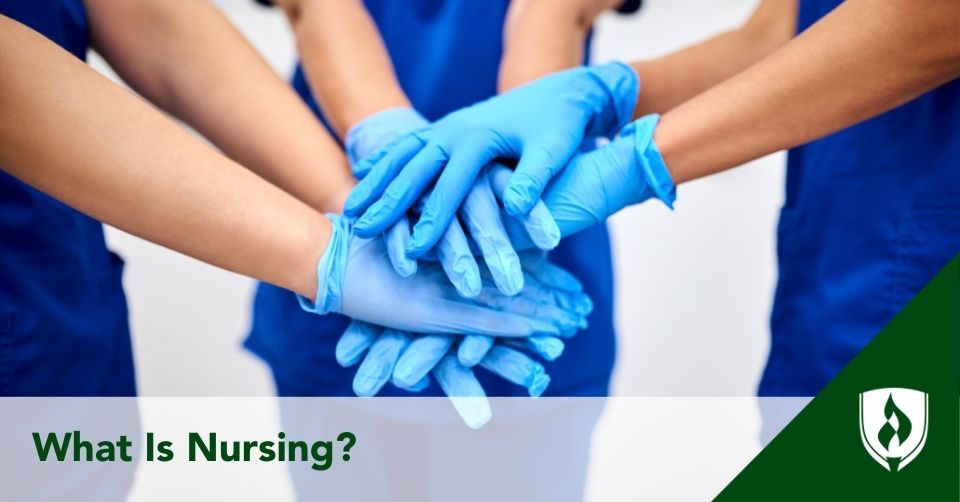
The American Nurses Association® states that the field of nursing integrates1 the art and science of caring and focuses on the protection, promotion, and optimization of health and human functioning; the prevention of illness and injury; the facilitation of healing; and the alleviation of suffering through compassionate presence. At its core, nursing is both a profession and a calling that’s rooted in human dignity, emotional support, scientific knowledge, and critical thinking.
Nurses typically engage1 in the diagnosis and treatment of human responses, and they advocate for individuals, families, communities, and entire populations across diverse health care settings. From hospitals to community health environments, to home health agencies, nurses play an essential role in every corner of the health system.
Typical Nursing Career Paths
The nursing profession includes typical career paths1 requiring different levels of nursing education programs, credentials, and advanced training.
Registered Nurses (RNs)
Registered nurses are widely recognized as playing a foundational role1 in health care in the United States. These health professionals work in medical facilities, medical centers, doctors' offices, and other health care facilities.
Registered nurses may work directly1 with patients by conducting physical exams, taking health histories, monitoring vital signs, and helping develop and implement treatment plans. Their responsibilities may range from coordinating the health care team to documenting care, interpreting diagnostic tests, and educating patients about health issues.
Advanced Practice Registered Nurses (APRNs)
An advanced practice registered nurse or advanced practice registered professional typically holds1 at least a master’s degree or graduate degree. APRNs include nurse practitioners, clinical nurse specialists, nurse midwives, and nurse anesthetists.
They may diagnose1 illnesses, prescribe medications, order and interpret tests, and provide highly specialized medical care. Their continuous education ensures they remain current in emerging research and technologies.
Licensed Practical Nurses (LPNs) and Licensed Vocational Nurses (LVNs)
A licensed practical nurse or licensed vocational nurse typically provides1 essential support in hospitals, long-term care facilities, and community health settings. They often administer medications, observe and report changes in health status, and assist with daily patient needs.
The Nursing Process
Across all nursing specialties, the nursing process serves1 as the core framework that guides safe, effective, and patient-centered care. This method helps nurses think critically, organize their clinical decisions, and ensure consistently high-quality patient outcomes.
The process unfolds through five steps:1
1. Assessment: Nurses may gather comprehensive information about the patient’s health status, including physical findings, medical history, emotional and social factors, and lifestyle.
2. Diagnosis: Using the data collected, nurses may identify the patient’s health needs and formulate nursing diagnoses that reflect both symptoms and observed behaviors.
3. Planning and Outcomes: Nurses may develop a clear plan of care by setting achievable, measurable goals tailored to the patient’s condition, needs, and desired health outcomes.
4. Implementation: The planned interventions are put into action. During this phase, nurses may deliver patient care, coordinate with the health care team, and accurately document every step to ensure continuity.
5. Evaluation: Nurses may then review the patient’s responses to the interventions and determine whether the goals have been met. Based on these findings, the care plan may be adjusted to continuously improve patient outcomes.
Typical Nursing Work Environments
Nurses may contribute to diverse environments, such as:2
Private practices
Health maintenance organizations
Public health agencies
Primary care clinics
Home health care
Nursing homes
Minute clinics
Outpatient surgicenters
Nursing school-operated clinics
Insurance and managed care companies
Schools
Mental health agencies
Hospices
The military
Health care research facilities
A Brief History of Nursing in the United States
The evolution of nursing3 in the United States reflects a shift from home-based caregiving to a professionalized, hospital-centered occupation. In the earliest periods, women naturally assumed the role of caregivers for children, family, and community, and some were even compensated as wet nurses when mothers were unable to nurse. For the first two centuries following European settlement, nursing primarily occurred in the home. Hospitals, when they emerged, such as the first in Philadelphia in 1751, were often seen as asylums or poorhouses rather than centers of reputable care. The Civil War accelerated the development of nursing as a recognized profession, as volunteers like Mary Ann Bickerdyke and, in the Confederacy, Sally Tompkins and Phoebe Levy Pember, provided critical care under challenging conditions, earning respect for the profession and demonstrating the vital role of nurses in organized healthcare.
Following the war, nursing transitioned increasingly into hospitals and formal educational programs. The late nineteenth century3 saw the rise of nursing schools affiliated with hospitals, which trained women under strict, regimented conditions, emphasizing discipline, clinical skill, and moral character. Figures like Dr. Marie Zakrewska and her first graduate, Linda Richards, helped establish formal curricula and set standards for professional nursing, including the first internationally recognized nursing training in Japan. While early nursing education largely excluded African Americans, pioneers like Mary Mahoney became the first credentialed black nurse in 1879 and later led efforts to support professional opportunities for minority nurses. By the turn of the twentieth century, the image of nursing had shifted from informal caregiving to a respected, structured profession, a foundation that continues to shape modern nursing practice.
A Dynamic, Evolving Nursing Career
With typical career paths ranging from bedside nursing to leadership, from research to education, and from clinical practice to public policy, nurses play a pivotal role in advancing health care as the profession continues to evolve. The profession continues to evolve as health systems change, technology advances, and populations grow more diverse.
At many levels, nurses may act as advocates, caregivers, teachers, and leaders ensuring that individuals receive respectful, safe, and effective care throughout their lives.
Want to take the next step in your nursing journey? Learn more about day-to-day responsibilities and specializations in "What Does a Nurse Do?". Or, if you're planning ahead, explore career possibilities with "What Can You Do With a Nursing Degree?" to understand the diverse paths available in this essential field.
American Nurses Association® is a registered trademark of American Nurses Association 8515 Georgia Ave, suite 400 Silver Spring, MARYLAND UNITED STATES 20910.
American Association of Colleges of Nursing® (AACN) is a registered trademark of American Association of Colleges of Nursing (non-profit corporation; DISTRICT OF COLUMBIA, USA).
1American Nurses Association® (ANA), What Is Nursing? at https://www.nursingworld.org/practice-policy/workforce/what-is-nursing/ (accessed Dec. 1, 2025).
2American Association of Colleges of Nursing® (AACN), Nursing Workforce Fact Sheet, at https://www.aacnnursing.org/news-data/fact-sheets/nursing-workforce-fact-sheet (accessed Dec. 1, 2025).
3The Evolution of Nursing, The American Women's Museum at https://www.womenshistory.org/articles/evolution-nursing (accessed Dec. 1, 2025).