What Is Health Information Management?
03/19/2026
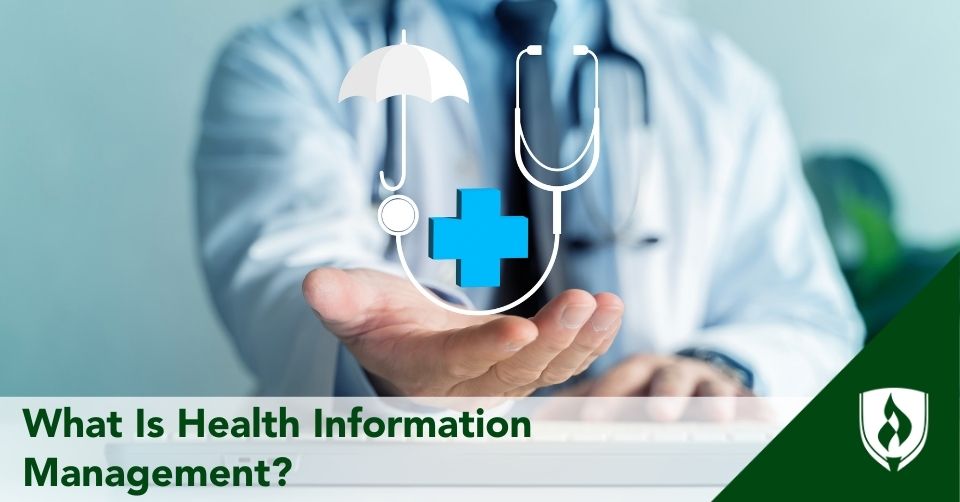
When thinking about healthcare, you might imagine doctors, nurses, or hospitals. Yet a critical component of healthcare may involve health information management (HIM), the field that focuses on the collection, organization, protection, and use of patient health information.
Health information management (HIM) professionals often work to ensure that medical records, patient data, and clinical documentation are accurate, accessible, and secure, potentially supporting quality patient care across healthcare delivery systems.¹
Understanding Health Information Management
Health information management can serve as a bridge between healthcare providers, information technology, and data analysis. HIM professionals may handle electronic health records, medical coding, medical billing, and treatment plans. Their work may contribute to patient safety, the accuracy of patient records, and decisions about patient outcomes.¹
HIM also involves managing patient health information and clinical documentation to support healthcare delivery systems while adhering to legal requirements and privacy standards. Through their work, health information managers and other health information professionals may help healthcare organizations coordinate patient care, evaluate health outcomes, and maintain secure and accurate health data. This field combines healthcare knowledge, information management skills, and critical thinking to address the evolving needs of the healthcare industry.¹
Key Functions of HIM Professionals
Health information may contribute in roles that involve maintaining patient information and supporting healthcare delivery systems.
Some common responsibilities may include:²
- Manage health information and electronic health records (EHRs) using current information technology.
- Understand healthcare workflows and support daily operations in hospitals and physician practices.
- Ensure patient information is complete, accurate, and protected.
- Serve as a link between clinicians, administrators, technology teams, and IT professionals.
- Standardize and safeguard patient data to maintain quality, integrity, and compliance across clinical, financial, and legal uses.
Typical Health Information Management Career Paths
Students and health information graduates might explore opportunities in several roles, which can vary depending on experience and training:³
- Health Information Services Manager
- Privacy Officer
- Health Information Applications and EHR Implementation Specialist
- Clinical/Healthcare Informatics Analyst/Specialist
- Compliance Officer or Auditor
- Revenue Cycle Reimbursement Manager
- Health Information Management Specialist
- Clinical Documentation Specialist
These roles are commonly found in settings such as hospitals, healthcare systems, insurance companies and health information technology vendors where HIM professionals may contribute to the organization and protection of patient health data.
Typical Skills To Be Gained in HIM Programs
Students enrolled in health information management programs might develop a combination of technical and professional skills, such as:³
- Data and Information Governance: Learn to organize and manage health data using technologies like telehealth, patient portals, and wearable devices.
- Information Protection and Security: Understand strategies to safeguard patient information and meet privacy requirements.
- Health Law and Compliance: Explore regulations and approaches for maintaining compliance throughout the health information life cycle.
- Leadership and Management: Build management skills for coordinating teams, projects, and organizational standards in healthcare settings.
- Healthcare Data Analytics and Informatics: Apply data analysis to interpret clinical data and support patient outcomes.
- Revenue Cycle and Financial Management: Gain insight into medical billing, reimbursement processes, and financial management in healthcare organizations.
Through information management education, new health information graduates may gain a comprehensive understanding of how health information management professionals contribute to healthcare delivery systems, patient safety, and health outcomes.
The Role of HIM in Healthcare
Health information administrators and health information technologists may support patient information, clinical documentation, and medical records management. By overseeing health data, contributing to patient safety, and assisting healthcare providers, HIM professionals play a part in supporting quality patient care, health outcomes, and the efficiency of healthcare delivery systems.¹
Exploring what is health information management can help prospective students understand the kinds of tasks, responsibilities, and skills that may be involved in this field. Depending on the program, students may have opportunities for hands-on learning experiences.¹
Getting Started in Health Information Management
Health information management plays an important role behind the scenes of modern healthcare, supporting the organization, protection, and use of patient information. For those exploring career options in healthcare, learning more about HIM can offer insight into how data, technology, and patient care intersect. If you're entering the field for the first time or building on previous education, understanding health information management may help clarify the skills, responsibilities, and potential pathways associated with this evolving area of healthcare.¹
¹ Rasmussen University, What Is Health Information Management? The Intersection of Health, Business and IT, at https://www.rasmussen.edu/degrees/health-sciences/blog/what-is-health-information-management-career/ (accessed Feb. 23, 2026).
² Bureau of Labor Statistics, U.S. Department of Labor, Occupational Outlook Handbook, Health Information Technologists and Medical Registrars, at https://www.bls.gov/ooh/healthcare/health-information-technologists-and-medical-registrars.htm#tab-2 (accessed Feb. 23, 2026). Employment conditions in your area may vary.
³ Rasmussen University, Health Information Management Bachelor’s Degree Online, at https://www.rasmussen.edu/degrees/health-sciences/health-information-management/bachelors/ (accessed Feb. 23, 2026).