What Is a Pharmacy Technician?
12/11/2025
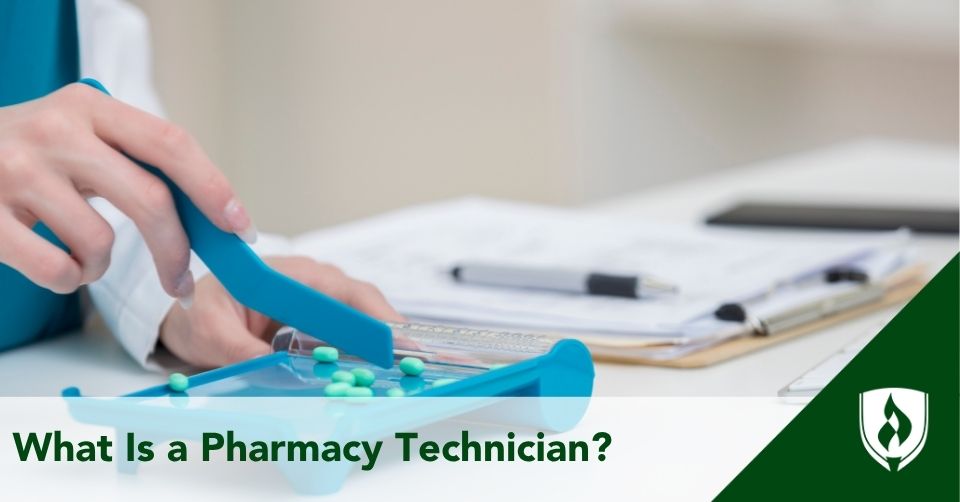
Recognizing the important work of pharmacy technicians sheds light on how they support pharmacists and strengthen the overall healthcare system.
Pharmacy technicians assist1 pharmacists in providing the best care to patients by accurately finding, packaging, and labeling prescription medications. Their work is reviewed and verified by pharmacists, ensuring patient safety and efficient pharmacy operations. Pharmacy technicians play a key role in supporting pharmacy operations and patient care in retail pharmacies and clinical pharmacy environments.
Pharmacy technicians perform diverse duties1 such as filling prescriptions, managing medication inventory, and assisting patients under the supervision of licensed pharmacists.
Education and Training Requirements for Pharmacy Technicians
Pharmacy technicians typically2 begin their preparation with a high school diploma or equivalent, followed by a formal education or training program in pharmacy technology. Rasmussen University offers a Pharmacy Technician Certificate program3 that provides both online learning and campus-based support. Students gain hands-on experience through a Pharmacy Practicum, applying their coursework in real-life scenarios while developing practical skills used in healthcare environments.
Rasmussen University’s Pharmacy Technician Certificate program includes coursework4 in medical law and ethics, medical terminology, pharmacology calculations, and more. Coursework such as3 Foundations of Pharmacy Practice and Pharmacology for Technicians may help students prepare for the field. Rasmussen University’s program is accredited by the Higher Learning Commission and recognized by the Pharmacy Technician Certification Board® (PTCB®) and designed to help students prepare to apply for national certification exams such as the PTCE® or ExCPT®.
On-the-Job Training for Pharmacy Technicians
On-the-job training may provide aspiring pharmacy technicians2 with practical experience in a retail pharmacy or clinical pharmacy setting under the supervision of a licensed pharmacist. During this stage, technicians may fill prescriptions, process insurance claims, and maintain patient files while applying concepts learned through classroom and laboratory work.
This hands-on experience2 may help aspiring pharmacy technicians develop skills such as basic math, pharmaceutical calculations, and organizational skills. It may also help students gain experience working directly with patients, pharmacists, and other healthcare professionals in real-world pharmacy environments.
Common Skills for Pharmacy Technicians
After completing Rasmussen's pharmacy technician program, graduates may learn these skills that they can apply to their everyday work:3
- Prepare and Handle Medications: Learn to read medication orders, fill prescriptions, prepare labels and perform inventory functions within the pharmacy setting.
- Ensure Safety and Quality Assurance: Understand required safety and infection-control policies and procedures to protect patients and employees.
- Use Pharmacy Technology and Informatics Tools: Gain practical experience using pharmacy software, technology and informatics to manage the pharmacy and process medications.
- Maintain Professional Pharmacy Practices: Ensure patient confidentiality by providing a high level of customer service to patients at the pharmacy counter or over the phone.
Pharmacy Technician Jobs and Typical Career Paths
Pharmacy technician jobs are typically found4 in retail pharmacies and clinical pharmacy environments, where technicians1 dispense medications, manage inventory, and assist pharmacists in providing patient care. These positions support pharmacy operations by handling prescriptions, maintaining patient files, and ensuring compliance with pharmacy law.
Pharmacy Technicians’ Work Environment
According to the U.S. Bureau of Labor Statistics (BLS), pharmacy technicians held about 490,400 jobs in 2024. The largest employers included:5
- Pharmacies and drug retailers: 52%
- Hospitals (state, local, and private): 17%
- General merchandise retailers: 9%
- Grocery and specialty food retailers: 9%
- Ambulatory healthcare services: 4%
Most technicians typically spend5 their workday on their feet, assisting pharmacists, serving patients, and performing duties such as filling prescriptions, processing insurance claims, and managing patient files.
Continuing Education and Career Development
After completing initial training programs2 and obtaining certification, pharmacy technicians may choose to pursue continuing education to stay current with new medications, evolving technology, and updated pharmacy law. Employers frequently provide ongoing development opportunities through workshops, online courses, and certification renewals.
Maintaining certification through the Pharmacy Technician Certification Board® (PTCB®) may also support professional growth for some pharmacy technicians.
Job Outlook and Growth Opportunities
According to the Bureau of Labor Statistics, employment of pharmacy technicians is projected6 to grow 6% from 2024 to 2034. This growth is influenced by an increasing demand for healthcare services and the need for skilled technicians to support pharmacists. Individual employment outcomes will vary.
Learning What a Pharmacy Technician Does
What Does a Pharmacy Technician Do? Recognizing the responsibilities and skills of pharmacy technicians deepens our understanding of how essential they are to the healthcare system. Their attention to detail, knowledge of pharmacy law and pharmaceutical terminology, and collaboration with pharmacists all contribute to the safe and effective use of medications in communities everywhere.
Pharmacy technicians play an indispensable role in the healthcare system, supporting pharmacists and may help to ensure every patient’s medication needs are met with accuracy and care.
The Pharmacy Technician Certification Board® and PTCB® is a registered trademark of the Pharmacy Technician Certification Board, Inc.
PCTE® is a registered trademark of Pharmacy Technician Certification Board, Inc.
ExCPT® is a registered trademark of ASSESSMENT TECHNOLOGIES INSTITUTE, L.L.C.
1Bureau of Labor Statistics, U.S. Department of Labor, Occupational Outlook Handbook, Pharmacy Technicians, at https://www.bls.gov/ooh/healthcare/pharmacy-technicians.htm#tab-2 (accessed November 3, 2025). Employment conditions in your area may vary.
2Bureau of Labor Statistics, U.S. Department of Labor, Occupational Outlook Handbook, Pharmacy Technicians, at https://www.bls.gov/ooh/healthcare/pharmacy-technicians.htm#tab-4 (accessed November 3, 2025). Employment conditions in your area may vary.
3Rasmussen University, Online Pharmacy Technician Program – Certificate, at https://www.rasmussen.edu/degrees/health-sciences/pharmacy-technician/certificate/ (accessed Nov. 3, 2025).
4Rasmussen University, 2025–2026 Catalog (page 55), at https://rasmussen.dcatalog.com/v/2025-2026-Catalog/?page=55 (visited Nov. 3, 2025).
5Bureau of Labor Statistics, U.S. Department of Labor, Occupational Outlook Handbook, Pharmacy Technicians, at https://www.bls.gov/ooh/healthcare/pharmacy-technicians.htm#tab-3 (accessed November 3, 2025). Employment conditions in your area may vary.
6Bureau of Labor Statistics, U.S. Department of Labor, Occupational Outlook Handbook, Pharmacy Technicians, at https://www.bls.gov/ooh/healthcare/pharmacy-technicians.htm#tab-6 (accessed November 3, 2025). Employment conditions in your area may vary.