What Does a Pharmacy Technician Do?
12/11/2025
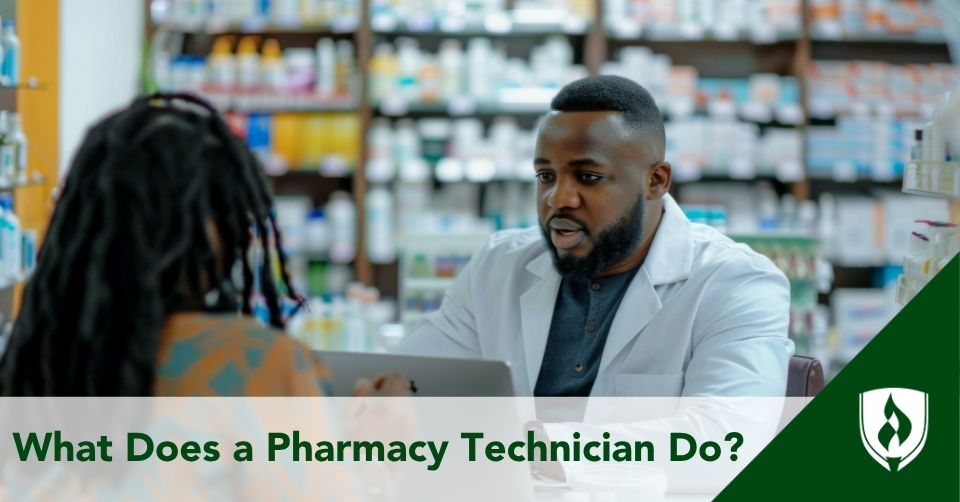
If you’ve ever watched a pharmacy team at work, you’ve probably seen how things operate, from receiving prescriptions to handing patients their medications. Behind that efficiency are pharmacy technicians, skilled healthcare professionals who make sure every medication is prepared safely and accurately.
Pharmacists oversee and verify prescriptions. Pharmacy technicians assist1 by carrying out the hands-on work that keeps the pharmacy moving.
Behind the Counter: The Heart of Pharmacy Operations
Pharmacy technicians typically play a central role in daily pharmacy operations, working1 alongside licensed pharmacists and other healthcare professionals. Their responsibilities vary based on setting, but their shared focus is always on patient care and patient safety.
In a typical day, pharmacy technicians might:1
- Review and prepare prescription medications for patient pickup
- Fill prescriptions by counting, measuring, or mixing medications
- Label and organize prescription bottles for pharmacist verification
- Process insurance claims to ensure patients receive coverage
- Manage medication stock and report shortages of certain medications
- Communicate with healthcare professionals about refill requests or clarifications
Every step they take contributes to safe, accurate dispensing of medications and a more efficient pharmacy experience for patients.
What Pharmacy Technicians Do in Different Settings
Retail Pharmacies
In retail pharmacies, pharmacy technicians often serve as the friendly, knowledgeable link between patients and pharmacists. Their day might include:2
- Helping patients understand the timeline for prescription refills
- Handling insurance processing and verifying coverage
- Preparing medications for pickup and organizing the day’s workflow
- Maintaining compliance with pharmacy law and safety procedures
Retail pharmacy technicians may balance administrative tasks, inventory checks, and face-to-face interaction while ensuring every medication is handled with care.
Clinical Pharmacy Environments
In clinical pharmacy settings such as hospitals, pharmacy technicians’ work shifts toward supporting patient treatment plans. They might:3
- Prepare intravenous medications and dosage units for hospital patients
- Manage controlled substances and track them accurately for patient safety
- Support nurses and other health professionals by delivering prescribed medications
- Assist with documentation and collaborate on medication protocols
Here, the focus extends beyond the counter to direct involvement in patient care, accuracy in medication preparation, and collaboration with medical professionals in a team environment.
Skills Pharmacy Technicians Typically Rely On
The best pharmacy techs blend precision, empathy, and adaptability. According to the U.S. Bureau of Labor Statistics (BLS), pharmacy technicians typically work4 in fast-paced, patient-focused environments that require a range of interpersonal and technical abilities, such as:4
- Customer-service skills: A helpful attitude makes patient interactions positive.
- Detail-oriented thinking: Each dose and label must be exact to ensure safety.
- Listening skills: Clear communication with pharmacists and doctors supports proper care.
- Basic math skills: Needed to calculate dosages and measure medications accurately.
- Organizational skills: Essential for managing inventory and multiple prescriptions at once.
How Pharmacy Technicians Learn These Skills
While education introduces the principles of pharmacy law, medical terminology, and dosage calculations, much of the practical learning happens4 through on-the-job training or clinical rotations. In these settings, pharmacy technicians learn how to apply classroom concepts in real-world scenarios, from verifying labels to identifying potential drug interactions.
Some pharmacy technician programs5 may include a pharmacy practicum, giving students the chance to experience real-life scenarios under the supervision of a professional. This experience may help students gain skills in confidence, efficiency, and readiness for certification exams.
The Importance of Certification and Professional Growth
After completing formal training or a postsecondary education program,5 aspiring technicians may be eligible to sit for a national certification exam, such as the one administered by the Pharmacy Technician Certification Board® (PTCB®). Earning a pharmacy technician certification and becoming a Certified Pharmacy Technician® (CPhT®) demonstrates mastery of essential skills and a commitment to patient safety.
Many pharmacy technicians may choose to pursue4 continuing education to stay current with updates in medication safety, technology, and pharmacy law. These opportunities may also help prepare for learning more about the health care industry, whether supporting pharmaceutical companies, working in hospital settings, or mentoring new technicians in retail pharmacies.
Why a Career as a Pharmacy Technician Matters
Pharmacy technicians play a crucial behind-the-scenes role in healthcare. Their precision helps ensure that prescribed medications are dispensed safely, their organization keeps pharmacy operations running smoothly, and their compassion supports patients managing chronic diseases.
By working closely with pharmacists, nurses, and other healthcare professionals, pharmacy technicians help create a more efficient, patient-centered healthcare system. It’s a hands-on, detail-driven career that makes a meaningful difference every day.
Explore Pharmacy Technician Programs
If learning what pharmacy technicians do inspires you to take the next step, consider how pharmacy technician programs may help you build the practical skills and confidence as you prepare to pursue entry-level opportunities in the field. Whether your goal is to assist in retail pharmacies or work within a clinical pharmacy setting, this career path may provide opportunities to contribute to patient care and support the vital work of the health care industry.
Pharmacy Technician Certification Board® is a registered trademark of the Pharmacy Technician Certification Board, Inc.
PTCB® is a registered trademark of the Pharmacy Technician Certification Board, Inc.
Certified Pharmacy Technician® is a registered trademark of the Pharmacy Technician Certification Board, Inc.
CPhT® is a registered trademark of the Pharmacy Technician Certification Board, Inc.
1Bureau of Labor Statistics, U.S. Department of Labor, Occupational Outlook Handbook, Pharmacy Technicians, at https://www.bls.gov/ooh/healthcare/pharmacy-technicians.htm#tab-2 (accessed Nov. 4, 2025). Employment conditions in your area may vary.
2Sunshine UC, What Is a Retail Pharmacy?, at https://sunshineuc.com/what-is-a-retail-pharmacy/ (accessed Nov. 4, 2025).
3Mayo Clinic College of Medicine & Science, Explore Healthcare Careers — Pharmacy Technician, at https://college.mayo.edu/academics/explore-health-care-careers/careers-a-z/pharmacy-technician/ (accessed Nov. 4, 2025).
4Bureau of Labor Statistics, U.S. Department of Labor, Occupational Outlook Handbook, Pharmacy Technicians, at https://www.bls.gov/ooh/healthcare/pharmacy-technicians.htm#tab-4 (accessed Nov. 4, 2025). Employment conditions in your area may vary.
5Rasmussen University, Online Pharmacy Technician Program – Certificate, at https://www.rasmussen.edu/degrees/health-sciences/pharmacy-technician/certificate/ (accessed Nov. 4, 2025).