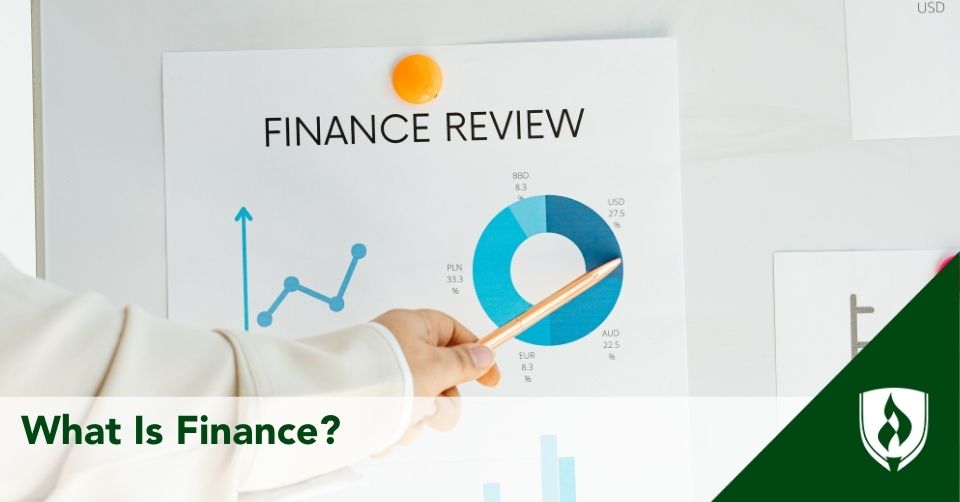
Finance is a broad term that encompasses1 the many ways people, businesses, and governments approach managing money. It touches nearly every aspect of economic life, from maintaining a savings account to investing through stock exchanges like the New York Stock Exchange®. At its core, finance involves1 decision making about spending, saving, borrowing, lending, and investing. Financial activities may shape both short-term choices and long term financial goals. They may have the potential to play a central role in the stability of households, companies, and the financial system as a whole.
The financial system connects1 you through financial institutions, financial markets, and financial instruments. Banks and investment banks help people deposit funds, access credit, or participate in markets, while stock exchanges allow investors to buy and sell individual securities such as stocks and bonds. These markets may help businesses raise capital, governments fund public programs, and investors evaluate the relationship between risk and return.
Core Areas of Finance
Finance is typically divided1 into three major categories: Personal finance, corporate finance, and public finance. Each one may deal with different financial activities and decision-making needs.
Personal Finance
Personal finance refers2 to the choices you make about how you earn, spend, invest, and protect you money. It involves budgeting, managing credit, choosing financial products, and planning for future goals.
Income - Income represents the money you bring in through employment or other sources like dividends or investment earnings. It includes all forms of cash inflow that support your financial life.
Spending - Spending covers the money you use for housing, food, transportation, hobbies, travel, entertainment, and other expenses. Monitoring how you spend helps you stay within your means and lowers the chance of taking on unnecessary debt.
Saving - Savings consist of whatever remains once your expenses are accounted for. These funds can be reserved for emergencies or major future needs, such as a home purchase.
Investing - Investing involves putting money into assets—such as stocks, bonds, or mutual funds—with the intention of earning returns over time. It requires accepting some level of risk in exchange for the potential to grow your financial resources.
Protection - Protection includes the safety nets you may set up to help guard yourself, your family, and your property from unexpected challenges. Examples include health and life insurance, as well as strategies like estate and retirement planning designed to provide long-term security.
Corporate Finance
Corporate finance, sometimes called business finance, focuses1 on how companies manage financial resources, structure operations, and plan for growth. Financial managers and analysts in this area typically evaluate financial statements, manage cash flow, and determine the best ways to raise capital.
Their work often involves:
Designing a company’s capital structure and managing debt financing
Reviewing how fixed assets and the company’s assets support long-term strategy
Analyzing revenue sources and monitoring working capital
Choosing whether to borrow money, issue bonds, or pursue equity options
A company’s finance team ensures that debt obligations remain manageable and that investment decisions support sustainable operations.
Public Finance
Public finance examines1 how the federal government and local governments allocate resources, collect taxes, and manage public spending. It shapes national priorities, infrastructure, and public services. Government agencies rely on financial data, often informed by economic indicators such as labor statistics, to guide decisions about taxation, debt obligations, and long-term planning.
Public finance also intersects with social finance, which directs capital toward charitable organizations, community projects, and initiatives that create social impact while still adhering to financial principles.
Investing Strategies and Asset Management
Investing and managing assets are typically central components of personal finance, focused2 on growing and protecting your wealth over time. Investments involve purchasing financial assets such as stocks, bonds, mutual funds, or real estate with the goal of earning a return while taking on some level of risk. Proper investment strategies may allow people to plan for long-term goals like retirement, buying a home, or funding higher education.
Assets are the resources2 you own that hold economic value, including cash, investments, property, and other valuable items. Effective asset management means not only accumulating these resources but also protecting them through tools like insurance and tax-efficient accounts. By combining careful investment planning with strategic management of assets, individuals may work toward building financial security, generating future income, and achieving their personal financial goals.
Personal Financial Risk Management
Personal financial risk management may help3 you identify and prepare for risks that could impact you, like unemployment, unexpected medical expenses, premature death, stock market volatility, property damage, legal claims, or outliving your savings. While it’s impossible to eliminate all risks, understanding them allows you to take steps to minimize their potential impact.
Some ways you can manage personal financial risk might include3 establishing an emergency fund to cover three to six months of living expenses, securing adequate insurance coverage for health, life, disability, and property, and diversifying your investments to reduce the impact of an unpredictable stock market. Additional measures such as estate planning, budgeting, and debt management help safeguard assets and ensure long-term financial resilience. Regularly reviewing your risk management plan and seeking guidance from financial professionals can help you adapt to life changes and market conditions, providing a secure foundation for achieving both short-term and long-term financial goals.
What Is Financial Management?
When it comes to the business world, financial management is the process4 of overseeing a company’s financial activities to work toward stability, growth, and profitability. It involves managing cash flow, monitoring transactions, maintaining compliance, and coordinating internal resources, all while leveraging the broader support of financial markets and institutions. Banks, lenders, and other intermediaries facilitate daily operations like payables, receivables, and account reconciliations, while also providing access to loans, debt financing, and investment opportunities.
Financial markets complement4 these efforts by offering venues where companies can raise capital, issue stock, and engage with investors. Data from these markets feeds into forecasting, budgeting, and scenario planning, helping finance teams make informed decisions despite changing economic conditions, interest rates, or market demand.
Beyond numbers, financial management requires understanding1 human behavior and organizational judgment. Leaders must weigh risk, interpret reports, and respond to uncertainty, combining analytical tools with behavioral insights. Together, internal finance functions, financial institutions, and markets provide the structure that allows businesses to allocate resources wisely, manage risk, and maintain long-term financial health.
Risk Management in Financial Operations
Businesses use financial risk management5 to identify, assess, and mitigate threats that could impact their financial health. Risks may come from market volatility, credit issues, liquidity shortfalls, operational inefficiencies, or legal and regulatory challenges. By systematically identifying and analyzing these risks, companies may be able to prioritize which threats pose the greatest danger and implement strategies to minimize their impact. Techniques such as diversification, hedging, insurance, and strong internal controls may help businesses work toward protecting assets, stabilizing cash flow, and maintaining operational continuity even during uncertain market conditions.
Effective risk management may not only safeguard against potential losses but may also support5 working toward a goal of long-term growth by enabling informed decision-making and strategic planning. Organizations can choose to leverage cross-functional collaboration and quantitative measures to continuously monitor risks, adjust strategies, and improve processes. Advanced tools, like integrated financial management software, may provide real-time visibility into operations and finances, helping leaders track risk exposure, optimize resources, and ensure compliance. Ultimately, a robust risk management framework may help companies work toward navigating uncertainty, protecting their financial position, and seizing opportunities for sustainable growth.
Why Finance Matters
Across personal, corporate, and public domains, finance plays a vital role in allocating resources effectively. It helps people and business work toward the goal of building security, allowing companies to grow and innovate, and enabling governments to support communities. By understanding finance, you may start to piece together how a world where money, markets, and management constantly intersect.
Interested in turning your understanding of finance into a career path? Read "What Can You Do with a Finance Degree?" to explore your options.
If you're curious about real-world roles in the field, then learn more in "What Does a Finance Professional Do?"
The New York Stock Exchange® is a registered trademark of NYSE GROUP, INC. (CORPORATION; DELAWARE, USA).
Robinhood® is a registered trademark of
Robinhood Markets, Inc. (CORPORATION; DELAWARE, USA).
New York Life® is a registered trademark of
New York Life Insurance Company (CORPORATION; NEW YORK, USA).
Oracle® is a registered trademark of Oracle International Corporation (CORPORATION; CALIFORNIA, USA).
NetSuite® is a registered trademark of NetSuite Inc. (CORPORATION; DELAWARE, USA).
1Robinhood®, What Is Finance?, at https://robinhood.com/us/en/learn/articles/5sCpX8sMV5KMRaGhYBe2UK/what-is-finance/ (accessed Dec. 2, 2025).
2New York Life®, What Is Personal Finance? at https://www.newyorklife.com/articles/what-is-personal-finance (accessed Dec. 2, 2025).
3New York Life®, Personal Financial Risk Management, at https://www.newyorklife.com/articles/personal-financial-risk-management (accessed Dec. 2, 2025).
4Oracle®, What Is Financial Management? at https://www.oracle.com/erp/financials/financial-management/ (accessed Dec. 2, 2025).
5NetSuite®, Financial Risk Management, at https://www.netsuite.com/portal/resource/articles/financial-management/financial-risk-management.shtml (accessed Dec. 2, 2025).