What Is Business Management?
12/11/2025
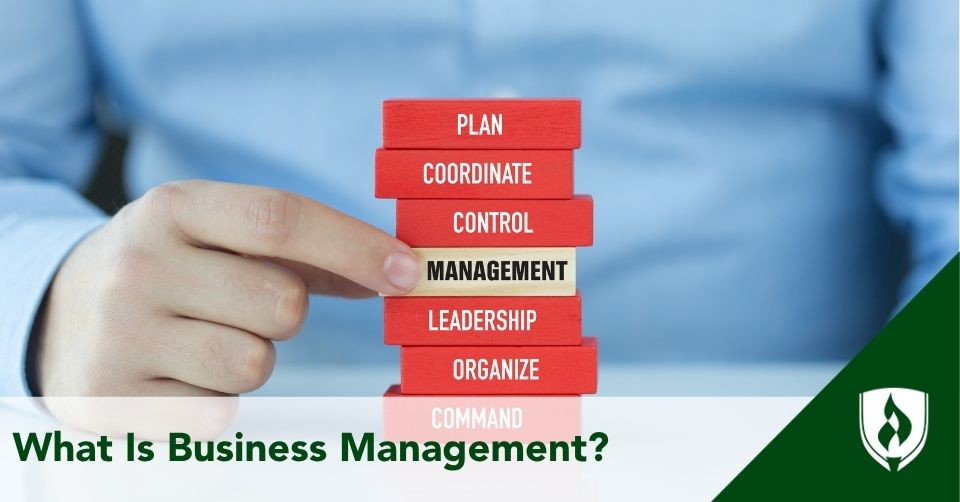
If you’ve ever wondered “what is business management?” and why it matters so much in today’s economy, you’re in the right place. Business management typically involves planning, organizing, directing, and controlling resources to achieve organizational goals. Whether you’re a business owner, aspiring project manager, or future chief executive officer, understanding how management works is the first step toward leading a successful organization.
Explore the foundations of business management, its key functions, and learn how effective management may drive organizational success for businesses.
Core Principles of Business Management
At its core, business management is about planning, organizing, directing, and controlling business operations to meet organizational objectives. It brings together people, resources, and systems to ensure continuous improvement and growth.
Business management involves planning strategically and allocating resources wisely.
There are typically four functions that may contribute to organizational success, including:
- Planning ahead and setting strategic goals
- Organizing resources and responsibilities
- Leading teams to achieve their objectives
- Controlling and monitoring progress
Managers must use critical thinking, problem solving, and leadership skills to make strategic decisions that may shape the company’s future.
Some key areas within business management typically include:1
- Financial management: Managing budgets, cash flow management, financial procedures, and financial analysis to ensure financial growth.
- Operations management: Overseeing production, logistics, and supply chain management to maintain efficiency in operational processes.
- Strategic management: Setting long-term business objectives, developing strategies, and implementing them to achieve organizational goals.
- Human resource management: Recruiting, training, and motivating employees to maximize employee performance.
- Marketing management: Creating an effective marketing management plan, building a strong brand management strategy, and performing competitor analysis to drive customer success.
In short, business management connects strategic planning with the practical application of business strategies that ensure organizational success.
The Role of a Business Manager
What Does a Business Manager Do? A business manager may play an important role2 in driving organizational success. They typically lead teams, coordinate business operations, and make strategic decisions that influence the company’s future.
Some common skills that top executives or business managers may use typically include:3
- Leadership and communication skills
- Analytical thinking, time management and problem-solving skills
- The ability to identify market trends and respond effectively
- Experience in project management, marketing strategy, or information technology management
Whether managing a small team or an entire division, business management may include balancing people, processes, and performance.
Business Management Systems and Processes
A business management system is the foundation4 that keeps an organization running smoothly. It integrates operational strategies, financial resources, and information technology management to ensure consistency and control.
Meanwhile, business processes include a series of operations,4 from production and logistics to customer service, that help organizations meet organizational objectives.
When well-designed, these systems and processes may support continuous improvement, better company analysis, and higher business outcomes across departments.
Management Tactics and Leadership Styles
Effective business management isn’t only about strategic planning or operational tactics, it also depends on how leaders influence, motivate, and guide their teams.
Leadership style plays a role in shaping workplace culture, employee performance, and organizational success. According to research from the IMD® Business School5, effective leaders typically adapt their approach to the needs of their teams and the challenges of the business environment.
Key Leadership Styles
- Transformational Leadership: Focused on inspiring innovation and change, transformational leaders motivate employees through vision and purpose. This style is often used by strategic managers who need to align people with long-term business objectives.
- Transactional Leadership: Based on structure, accountability, and performance rewards, this transactional management style is suited to achieving short-term goals and maintaining control over business processes and financial management.
- Authoritative (Visionary) Leadership: Authoritative leaders set a clear vision for the company’s future and guide their teams toward achieving it. This style is valuable for senior management making strategic decisions and implementing strategies across departments.
- Democratic (Participative) Leadership: A democratic management style encourages collaboration, open communication, and shared decision-making. It strengthens team engagement and helps managers align diverse perspectives when developing strategies or optimizing business operations.
- Delegative (Laissez-Faire) Leadership: Delegative leaders provide autonomy and trust their team members to manage their own projects. This approach can foster creativity and accountability, especially among experienced project managers and specialists.
- Servant Leadership: Focused on the growth and well-being of others, servant leaders emphasize empathy, ethics, and empowerment. This style supports human resource management and sustainable management practices, creating a foundation for long-term success.
In modern organizations, there’s no single “best” management style. Successful leaders demonstrate flexibility, blending approaches as needed to support both effective business management and the unique needs of their teams.
Communication and Leadership in Business
Strong communication skills are3 typically important for any business manager or senior management professional. Clear communication supports team members, minimizes conflict, and ensures everyone understands their role in achieving organizational objectives.
Top executives and leaders may also inspire others through vision, empathy, and a commitment to organizational success; which may be elements of effective business management.
Measuring Business Outcomes
Top executives or business managers have different approaches on how to measure business outcomes. These may include:2
- Financial growth and profitability
- Enhanced employee performance and engagement
- Improved customer satisfaction and retention
- Streamlined business operations and reduced waste
Tracking these outcomes may allow strategic managers to adjust management practices and maintain continuous improvement.
Why Study Business Management?
What Can You Do With a Business Management Degree? Studying business management may help prepare students with a foundation in leadership skills and business adaptability. Coursework typically includes:6
- Business research and analysis
- Financial decision making and risk management
- Business law and ethical behavior
- Foundations of digital marketing
- Operations management
This blend of theory and practical application may help students develop the skills they need to lead and innovate.
Explore a Future in Business Management
Understanding what business management is is just the beginning. Whether you aim to work in marketing, operations, project management, or human resources, a background in business management may help individuals prepare for leadership and strategic roles in a variety of organizational settings.
This article is for informational purposes only and does not guarantee employment or career advancement.
IMD® is a registered trademark of IMD - International Institute for Management Development.
1Business.com, 8 Branches of Business Management, at https://www.business.com/articles/8-branches-of-business-management/ (accessed Nov. 4, 2025).
2Bureau of Labor Statistics, U.S. Department of Labor, Occupational Outlook Handbook, Top Executives, at https://www.bls.gov/ooh/management/top-executives.htm#tab-2 (accessed Nov. 4, 2025). Employment conditions in your area may vary.
3Bureau of Labor Statistics, U.S. Department of Labor, Occupational Outlook Handbook, Top Executives, at https://www.bls.gov/ooh/management/top-executives.htm#tab-4 (accessed Nov. 4, 2025). Employment conditions in your area may vary.
4Agility System, Business Management Systems: A Practical Guide, at https://www.agilitysystem.net/insight/business-management-systems-practical-guide/ (accessed Nov. 4, 2025).
5IMD Business School, The 6 Most Common Leadership Styles and How to Find Yours, at https://www.imd.org/blog/leadership/leadership-styles/ (accessed Nov. 4, 2025).
6Rasmussen University, Bachelor’s Degree in Business Management, at https://www.rasmussen.edu/degrees/business/business-management/bachelors/ (accessed Nov. 4, 2025).